

What Are Backlinks and Why Do They Still Matter for SEO in 2026?


Are you wondering why some websites rank first even when their content is obviously not better than yours? The answer often comes down to backlinks. A backlink is a link from another website pointing to yours. It is one of the oldest, most consistent ranking factors that Google still uses today.
This guide explains exactly what backlinks are, why they still matter in 2026, and how to tell a genuinely useful backlink from one that could quietly hurt your rankings. By the end of this article, you will know what to build toward and what to avoid entirely.
This is a subtitle for your new post
Backlink: What Is It?
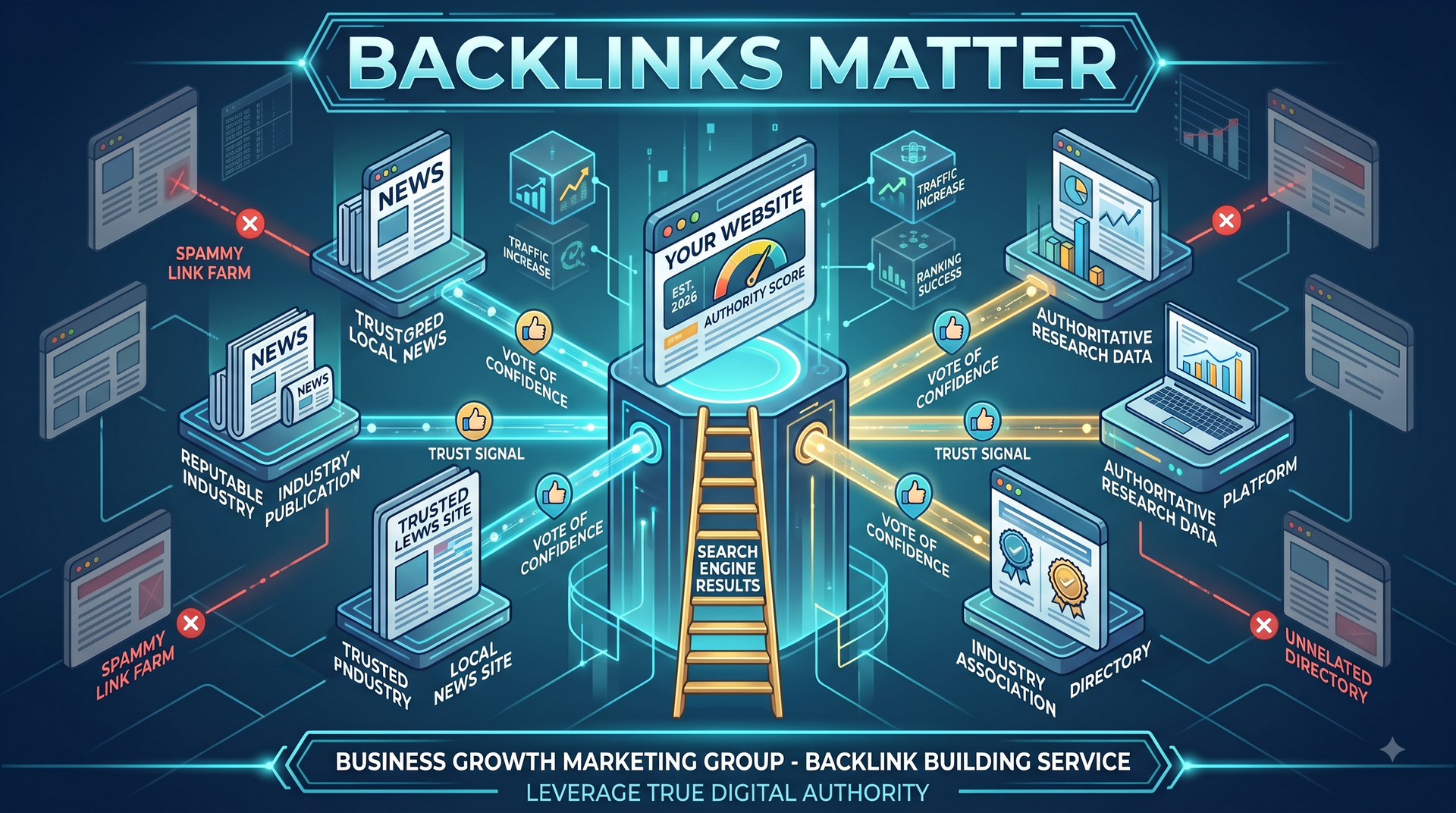
In simple terms, a link on someone else's website that leads back to a page on your website is known as a backlink. Think of it as a vote of confidence from one site to another. When a reputable blog, news site, or industry directory links to your page, it effectively tells Google that your content is worth directing people to.
The more votes you receive from credible sources, the stronger your signal becomes. It is similar to how a recommendation from a trusted friend is more credible than a stranger's opinion.
How Backlinks Work Behind the Scenes
Backlinks work by passing a signal of trust and relevance from the linking site to yours. Google's crawlers follow these links across the web, building a map of which sites are trustworthy enough that others choose to reference them.
Since Google considers the source's credibility in addition to the link's existence, a link from a reputable website has more weight than one from an unrelated page. This is why one strong, relevant link can outperform a dozen weak, unrelated ones.
Why Backlinks Still Matter for SEO in 2026
Backlinks are still important because Google continues to use them as one of the most obvious indicators of credibility. Although content quality and user experience have grown in importance over the years, backlinks have not disappeared from the equation.
This is because backlinks are one of the few signals that are difficult to fake on a large scale, which is why Google continues to rely on them. Businesses that ignore backlinks entirely are leaving one of the strongest ranking factors completely untouched.
Google Treats Backlinks as a Trust Signal
Google treats backlinks as a trust signal because they represent an independent, third-party endorsement rather than a claim you're making about yourself. Anyone can write "we're the best in the industry" on their own homepage.
Contrarily, it is much harder to convince other credible websites to link to you unless your content or business genuinely deserves the mention. That independence is what makes backlinks resistant to manipulation, at least when they're earned properly.
Why Some Backlinks Are Worth More Than Others
Not every backlink has the same value, and treating them as interchangeable is one of the most common mistakes businesses make. A single link from a respected, relevant source can outweigh dozens of links from low-quality sites. Understanding this distinction early saves a lot of wasted effort chasing the wrong kind of links.
| Backlink Source | Typical Value | Why |
|---|---|---|
| A relevant industry publication | High | Topically related and genuinely trusted by readers |
| A local news site covering your business | High | Relevant, credible, and often locally significant |
| A generic, unrelated directory | Low | No topical relevance, minimal trust passed on. |
| A spammy link farm or paid link network | Very low or harmful | Google actively devalues or penalizes these |
How to Differentiate a Healthy Backlink Profile From a Risky One
A healthy backlink profile comes from a natural mix of relevant, credible sources built over time, not a sudden spike of low-quality links. Reviewing your own backlink profile regularly helps you catch problems before they start affecting your rankings. Most tools that show your backlinks will flag the warning signs below if you know what to look for.
| Sinal | Healthy Backlink Profile | Risky Backlink Profile |
|---|---|---|
| Growth Pattern | Gradual, steady increase over time | Sudden, unnatural spikes in a short period |
| Source Diversity | Links from many different, relevant domains | Most links coming from the same few low-quality sites |
| Anchor Text | Natural, varied phrasing | Repeated exact-match keywords in every link |
| Relevance | Sources connected to your industry or location | Links from completely unrelated topics or countries |
Where to Get High-Quality Backlinks
Good backlinks come from genuine relationships, useful content, and real activity within your industry, not from buying links in bulk. Building them takes more patience than shortcuts, but the results hold up far better over time. Consider these legitimate sources to build backlinks that actually perform:
- Guest posts written for relevant industry blogs or publications
- Local news coverage of an event, milestone, or story tied to your business
- Partnerships with suppliers or industry associations that link back to your site
- Directory listings specific to your industry or region, not generic ones
- Original research, data, or tools other sites want to reference and link to
Common Backlinking Mistakes That Can Hurt Your Rankings
Backlinking mistakes usually involve chasing shortcuts that promise quick results but carry real risk if Google notices the pattern. Avoiding these mistakes matters just as much as building good links in the first place:
- Buying links in bulk from link farms or low-quality marketplaces
- Using the exact keyword phrase as anchor text across dozens of links
- Getting links from websites in completely unrelated industries or countries
- Ignoring toxic or spammy backlinks instead of disavowing them
- Focusing purely on link quantity while ignoring the quality of each source
Since building a truly healthy link profile takes constant effort that most business owners don't have time for, this kind of ongoing work is covered by our backlink building service.
Frequently Asked Questions
Do backlinks matter equally for local SEO and national SEO?
Not really. Local SEO tends to benefit more from links tied to a specific region, like local news sites or community organizations, while national SEO benefits more from broad industry authority and topical relevance across a wider audience.
How many backlinks does a small business actually need to compete?
There is no fixed number. It depends heavily on how competitive your industry and keywords are. A handful of high-quality, relevant links often outperforms a large volume of low-quality ones, so quality should always come before chasing a specific count. It is better to focus on steady, consistent growth rather than a target number.
Can I remove a bad backlink myself, or do I need Google's help?
You can contact the site owner directly and ask them to remove the link, which is the cleanest solution when it works. If that fails, Google's disavow tool lets you formally tell Google to ignore specific links when evaluating your site. However, this tool should be used carefully, since disavowing genuinely good links by mistake can undo positive work.
How long does it typically take for a new backlink to affect rankings?
It varies, but most backlinks take a few weeks to a couple of months to show measurable impact, since Google needs time to crawl, evaluate, and factor the new link into its assessment of your site.
Build Backlinks That Actually Hold Up Over Time
Backlinks have not lost their importance in 2026. They have simply become harder to fake, which is good news for businesses willing to earn them properly. A handful of genuinely relevant, credible links will do more for your rankings than a pile of low-quality ones, and understanding that difference is the first step to building a backlink profile that actually holds up. The businesses that get this right treat backlinks as a long-term asset, not a quick fix.
If building a legitimate backlink profile feels like more than you can manage alongside running your business, Business Growth Marketing Group's backlink building service is built exactly for this. Get in touch with us and let's build a backlink profile that genuinely strengthens your rankings on search engines.
More Recent Blogs