

Local SEO for South African Small Businesses: A Step-by-Step Guide


If you run a business, you know how SEO has changed the way your venture is found. A search bar is often the first stop before anyone visits a shop, books a service, or dials a call. This shift has significantly rewritten the rules of competition, especially for smaller businesses that once relied on foot traffic or word of mouth alone.
Now, to cope with the competition, you need local SEO. It makes your business show up when nearby customers search for the services you offer. This includes Google Maps, the local pack, and regular search results.
Local SEO easily beats a website redesign, social media campaigns, and paid ads. In this article, we will walk you through exactly how to implement local SEO, step by step, without the usual jargon. Continue reading to learn.
What Local SEO Means for a Small Business
Local SEO means optimizing your online presence so Google connects your business to nearby searches. It is not the same as ranking this blog post nationally or competing for a broad, high-volume keyword.
Instead, it is about being the answer when someone types "electrician near me" or "best digital marketing services in Gauteng" into their phone. In short, Local SEO enables your business to appear on the screens of your potential customers.
How Does Local SEO Differ From Regular SEO?
While regular SEO chases rankings across the whole country or region, local SEO narrows that down to a radius around your business. The term “local” is used for a reason, of course.
It also pulls in signals that regular SEO cannot touch. In order to achieve this, your Google Business Profile matters. Your physical address matters. Additionally, your online reviews matter. Contrarily, a page trying to rank nationally doesn't need any of that.
Local SEO Matters More for Small Businesses Than Big Brands
We need to understand that a big retail chain is not fighting for "plumber near me" the way a local plumbing business is. That gap is where small businesses win if they actually do local SEO right. It gives new setups a rare advantage in local search, where national brands often do not bother optimizing for hyper-local intent.
A Step-by-Step Process to Implement Local SEO
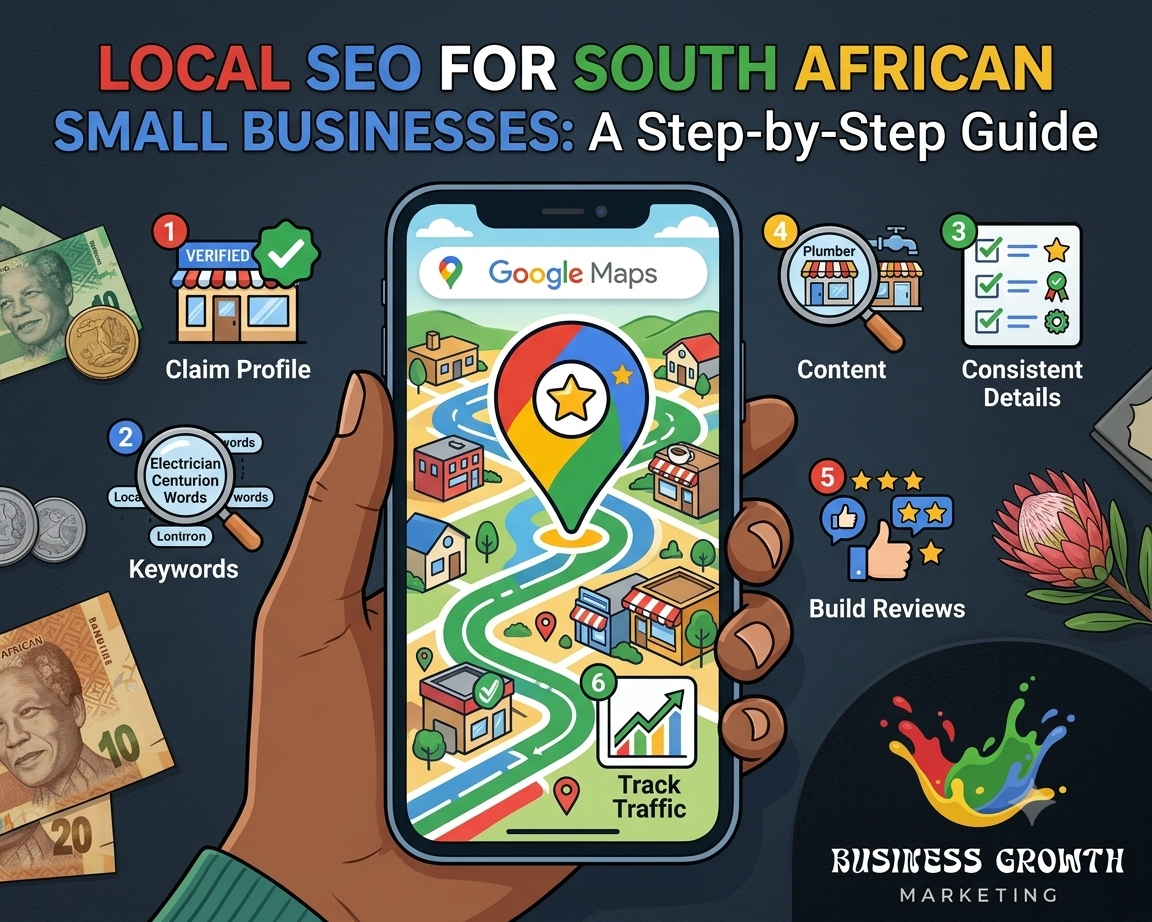
Now that we have learned the significance of local SEO and how it boosts your business’s online visibility, let's learn where to begin. Here is the exact step-by-step sequence to follow, from claiming your listing to tracking your results.
Step 1: Claim and Optimize Your Google Business Profile
Setting up your Google Business Profile is the first and most important step in local SEO. It is usually the first thing a potential customer sees when they want to know about your business.
An unclaimed or a half-finished profile instantly sends a negative signal to Google and your interested customers, indicating that your business is not fully active online.
What to Fill In First for Google Business Profile
For the initial step, start with the basic information. But remember that Google rewards complete profiles. Here is what you need to fill out first to set up a Google Business Profile:
- Business name, address, and phone number, exactly as they appear elsewhere online (social media platforms, ads, etc.)
- Correct business category and any relevant secondary categories
- Accurate operating hours, including holiday schedule
- A clear, honest business description that does not sell but informs what you do
Photos, Posts, and Categories That Support Ranking
Profiles with regular photo updates and posts tend to outperform static ones. The reason is simple: Google treats fresh activity as a sign that a business is active and trustworthy.
Real photos of your team or your work do more here than a social media campaign. This kind of ongoing work is easy to start and easy to forget. That is why businesses often take support for Google Business Profile management instead of letting the listing go stale.
Step 2: Target the Keywords Your Customers Are Typing
Keyword research for local SEO means finding the exact phrases that nearby customers use. It means you need accuracy and not assumptions. Most small business owners guess at this step, and guesses are usually wrong. Here is how you can get the job done right:
Find Local Keywords Without Expensive Tools
Google's autocomplete and the "People also ask" section are free to access and surprisingly accurate. Simply type your service into Google. Then add "near me" or your suburb. Note what autocompletes, then check which questions appear under the first few results. That is a live snapshot of what real people are searching for right now.
The Correct Keyword Placement
In order to matter and generate results, the keywords need to be placed in the right places. Some of the most accurate places are page titles, headings, the first hundred words of a page, and image alt text. Random stuffing of keywords throughout a page does not help. Instead, it can actually hurt the readability of your website.
Step 3: Get Consistent Business Details Everywhere Online
Your business name, address, and phone number must match exactly across directories on every platform. It is important because Google cross-checks this information, and mismatches create doubt about which version is correct.
Common Citation Mistakes That Businesses Often Make
Here are the most common citation problems and how they can be fixed:
| Mistake | Why it’s a Problem | How to Fix It |
|---|---|---|
| "St" in one directory, "Street" in another | Google can't confirm it is the same business. | Standardize the text format across all listings. |
| The old phone number is still live on an old directory. | It confuses both Google and the customers who call. | Audit directories quarterly and update or remove expired information. |
| Duplicate listings for the same location | Splits your reviews and ranking signals into two | Merge or remove the duplicate through Google. |
| Missing suite or unit number | Makes the address technically incorrect | Match the exact address format used on your website. |
When listing your business, start with the platforms that carry the most weight. This means Google Business Profile, Facebook, and major South African directories relevant to your industry. After that, move on to smaller or niche listing sites.
Step 4: Build Local Content Targeting Your Service Areas
Local content means creating service pages and posts that speak to the areas and services you cover. Generic pages that could belong to any business anywhere can not do the job. This is where many small-business websites fall flat. They have one vague "services" page trying to replace ten specific ones.
It is obvious that a landing page titled "Emergency Plumbing in Pretoria East" will usually beat a generic "Our Services" page. Specification matches the search intent far more precisely, enabling businesses to appear on potential customers' screens.
Step 5: Build Reviews and Manage Your Reputation
Online reviews not only help you gain customer trust but also directly influence local rankings. Google factors in review count, recency, and rating when ranking local results. A business with fifteen recent five-star reviews will easily outrank a competitor sitting on three reviews from two years ago.
When to Ask Your Customer for a Review
Remember that timing beats scripting. Asking at the right moment gets far better response rates than a generic request sent weeks later. The best moments to request a customer review are the following:
- Right after a completed job or delivery, while the experience is still fresh
- Immediately after a resolved complaint or support query
- Straight after a successful purchase or booking confirmation
- When a customer gives verbal praise in person or over the phone
Note: A direct link that takes the customer straight to the review box removes the biggest barrier of all: simple friction.
Step 6: Keep Track of What is Driving Traffic
Tracking means measuring specific numbers over time. This tells you whether your local SEO effort is paying off, instead of relying on a general feeling that "things seem better."
Here is how to stay updated on your business:
| What to Track | What It Tells You | How Often to Check |
|---|---|---|
| Google Business Profile views and actions | Whether your business is getting views and clicks | Monthly |
| Keyword rankings | Whether your on-page work is gaining ground | Monthly |
| Calls and directions requests from your listing | Real-world demand generated by local search | Weekly or Monthly |
| New customer reviews | Whether your reputation is growing | Monthly or after a completed job |
| Organic traffic to location or service pages | Whether your content is pulling in the right visitors | Monthly |
Frequently Asked Questions
How much should local SEO cost for a small business in South Africa?
Local SEO costs vary depending on how competitive your industry is and how much work your current online presence needs. A business starting from scratch, with no listings and a thin website, generally needs more upfront investment than one just maintaining existing rankings.
Does local SEO work for businesses that only sell online, with no physical storefront?
It works differently for online-only businesses because there's no physical location to anchor local signals. Service-area businesses can still set up a Google Business Profile without displaying an address. The strategy relies more on service-area pages and less on map-pack visibility.
Turning Local Visibility Into Real Customers
Local SEO is not one task you finish and forget. Rather, it is a handful of ongoing habits. A complete profile, consistent listings, useful local content, and steady reviews build over months into a real, measurable stream of customers. Most small businesses in South Africa aren't losing out to bigger competitors. Instead, they are losing out to competitors who simply followed the six steps above properly.
If you want to handle local SEO properly while managing your business, Business Growth Marketing Group's local SEO service is built for that. Get in touch with us, and let's get your business showing up where your customers are already looking.
More Recent Blogs